That little amber glow on your dashboard can mean a lot of things, but ignoring a check engine light is never the right call. At Clark’s Car Care in Naperville, IL, our team helps drivers figure out exactly what their vehicle is trying to tell them through thorough check engine light testing, Digital Vehicle Inspections, and honest explanations that make it easy to understand your options. In this post, we’ll cover the most common causes, what to do when the light comes on, how to know when it’s an emergency, and what the testing process actually looks like.
Your Car Is Talking. Here's What It's Saying.
Modern vehicles are equipped with an onboard diagnostic system that constantly monitors dozens of sensors and components. When something falls outside the expected range, the system triggers a fault code and lights up your dashboard.
The light itself doesn’t tell you what’s wrong. It tells you something needs attention. That’s where professional testing comes in.
Here are the most common reasons a check engine light turns on:
Emissions System Faults
The evaporative emission control system (EVAP) prevents fuel vapors from escaping into the atmosphere. A leak anywhere in this system, including a cracked hose or a loose gas cap, can trigger the check engine light, though the light may not appear immediately since the EVAP self-test only runs under specific conditions. If your check engine light is on and your car is running normally, bring it to Clark’s Car Care so we can identify whether it’s an EVAP fault or something deeper in the system.
Oxygen Sensor Failure
Your vehicle has multiple oxygen sensors that monitor the exhaust stream. A failed upstream oxygen sensor can cause the engine to run rich, which sends excess unburned fuel into the exhaust stream and can eventually damage the catalytic converter. Reduced fuel economy and higher emissions are also common effects.
Catalytic Converter Issues
The catalytic converter reduces harmful pollutants before they exit the tailpipe. When it begins to fail, whether from repeated misfires, upstream sensor problems, or other engine issues left unaddressed, it triggers its own fault code. This is a more expensive repair, but it’s also largely preventable with timely maintenance.
Ignition System Problems
Engine repair often starts with something as straightforward as a misfire. Worn spark plugs, a failing ignition coil, or a damaged plug wire can all cause the engine to misfire. A flashing check engine light almost always indicates an active misfire, which can damage the catalytic converter quickly. Do not ignore a flashing light.
Mass Airflow Sensor Failure
The mass airflow (MAF) sensor measures how much air enters the engine. When it fails, the engine control unit can’t calculate the correct fuel injection amount, leading to rough running, poor fuel economy, and a lit check engine light.
Fuel Delivery Problems
Issues with the fuel pressure regulator, fuel injectors, or fuel pump can all trigger codes. When the engine isn’t receiving the right amount of fuel at the right pressure, performance and emissions both suffer.
Flashing vs. Steady: Not All Check Engine Lights Are the Same
This is something a lot of drivers don’t realize, and it matters.
| Light Behavior | What It Means | What to Do |
|---|---|---|
| Steady amber light | A stored fault code; non-emergency but needs attention | Schedule an appointment soon |
| Flashing or blinking light | Active misfire detected; potential converter damage | Stop driving if possible; get it checked immediately |
| Red warning light (some vehicles) | A separate system warning (oil pressure, coolant temp, etc.); these are distinct from the check engine light and require immediate attention | Pull over safely and call for assistance |
A steady check engine light gives you some time to get it properly tested. A flashing light does not. If your light is blinking, limit driving and bring the vehicle in as soon as possible.
What Happens During Check Engine Light Testing in Naperville, IL
Here’s where a lot of people have the wrong idea. Scanning a code is not the same as diagnosing the problem. A code reader pulls the fault code that triggered the light. That code is a starting point, not an answer.
Real check engine light testing looks like this:
- Code retrieval: The technician retrieves all stored and pending fault codes from the vehicle’s onboard system.
- Code interpretation: Each code points to a circuit, sensor, or system. The technician evaluates what it means in the context of the vehicle’s history and symptoms.
- Component-level testing: The technician tests the actual components involved. A code for an oxygen sensor, for example, doesn’t automatically mean the sensor is bad. The wiring, connectors, and related systems all need to be ruled out.
- Root cause identification: The goal is finding why the code triggered, not just which code triggered. A misfire code, for instance, could be caused by spark plugs, injectors, coils, compression, or even a vacuum leak.
- Clear explanation: At Clark’s Car Care, customers receive a straightforward explanation of what was found and what their repair options are, so they can make an informed decision.
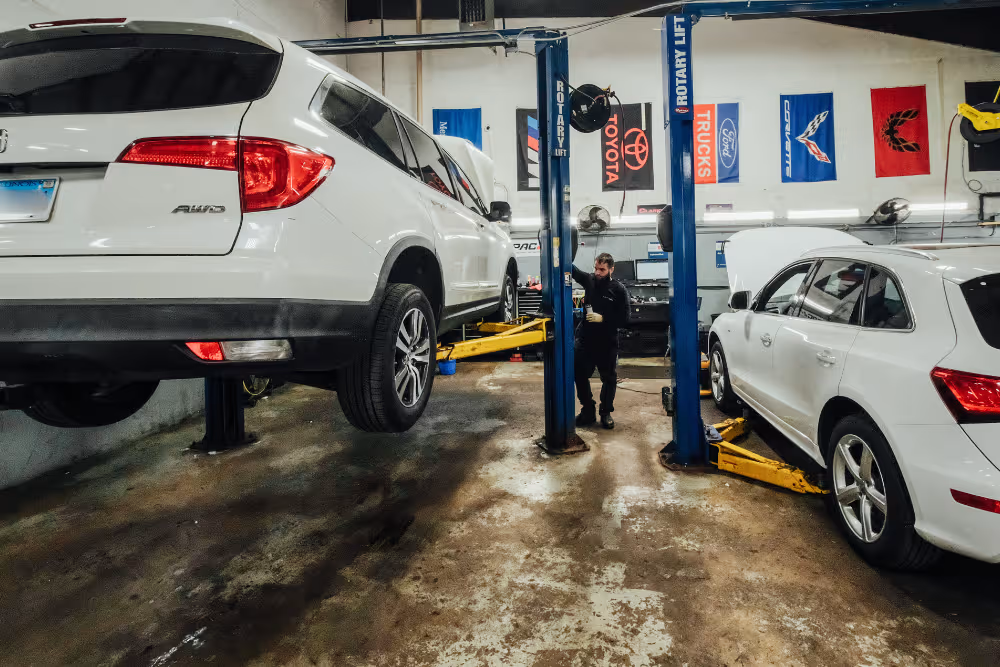
At Clark’s Car Care, this process uses Snap-On diagnostic scanners, which give technicians detailed, vehicle-specific data to work with rather than generic readouts.
Not sure what your check engine light means? Bring your vehicle to Clark’s Car Care at 440 Industrial Dr, Unit C, Naperville, IL 60563, or call 630-527-0967 to schedule your testing appointment. Our team will walk you through exactly what we find.
Driving with the Light On: When It's Fine and When It's Not
The honest answer: it depends on the light’s behavior and any symptoms your vehicle is showing.
It may be okay to drive short-term if:
- The light is steady (not flashing)
- The vehicle is running normally with no rough idle, stalling, or power loss
- You have an appointment scheduled within a few days
Get off the road if:
- The light is flashing or blinking
- You notice rough running, stalling, or loss of power
- You smell fuel or burning
- Another warning light (oil pressure, temperature) is on at the same time
Driving with an unresolved check engine light can turn a minor repair into a major one. Many emission-related faults will quietly damage downstream components if ignored long enough.
Why Naperville, Stonebridge, and Warrenville Drivers Choose Clark's Car Care
If you’re searching for check engine light testing in Naperville, IL, you want a shop that goes beyond pulling a code and calling it done. Clark’s Car Care has been serving Naperville and surrounding communities, including Stonebridge, Warrenville, Woodridge, Eola, Cress Creek, and Brookdale since 2001, and the approach has never changed: be honest, be thorough, and make sure every customer leaves knowing exactly what was done and why.
Here’s what that looks like in practice:
- NAPA AutoCare Warranty: Qualifying repairs are backed by the NAPA AutoCare 3-year/36,000-mile Peace of Mind Warranty, honored at locations nationwide.
- Snap-On Diagnostic Scanners: Vehicle-specific scanner data gives technicians deeper insight than generic code readers.
- CarFax Top-Rated Service Center: Recognized for service quality and customer satisfaction.
- Digital Vehicle Inspections: After testing, a DVI documents the vehicle’s overall condition in photos, giving customers a transparent look at what was found.
- Financing Available: Synchrony, Snap, and Affirm financing options are available for qualifying repairs.
- Comfortable While You Wait: If you choose to wait, the waiting area includes a massage chair, snacks, beverages, and a kids’ play area. Loaner vehicles and shuttle service are also available.
FAQs About Check Engine Light Testing
Where can I get check engine light testing in Naperville, IL?
Clark’s Car Care at 440 Industrial Dr, Unit C, in Naperville, IL, offers comprehensive check engine light testing using Snap-On diagnostic scanners and component-level evaluation. The team explains every finding in plain language so you can make an informed repair decision.
What causes a check engine light to come on?
A check engine light can be triggered by dozens of different fault codes, but the most common causes include a loose gas cap, oxygen sensor failure, catalytic converter problems, misfires from worn spark plugs or ignition coils, mass airflow sensor failure, and EVAP system leaks.
Is it safe to drive with a check engine light on?
If the light is steady and your vehicle is running normally, short-term driving is generally okay while you arrange an appointment. If the light is flashing, the vehicle is rough-running, stalling, or another warning light is illuminated at the same time, stop driving and get the vehicle evaluated immediately.
How quickly should I get a check engine light checked?
A steady check engine light should be evaluated within a few days. A flashing check engine light indicates an active misfire and should be treated as an urgent issue, as continued driving can damage the catalytic converter and significantly increase repair costs.
What happens during check engine light testing?
Technicians retrieve stored fault codes from the vehicle’s onboard diagnostic system, then test the actual components involved to find the root cause rather than just the triggering code. At Clark’s Car Care, the process concludes with a clear explanation of what was found and what repair options are available.
Schedule Your Check Engine Light Testing in Naperville, IL Today
When that amber light comes on, don’t guess and don’t wait too long. Clark’s Car Care is here to help drivers throughout Naperville, Warrenville, Woodridge, Brookdale, and Eola, IL get accurate answers and honest repair options. Visit us at 440 Industrial Dr, Unit C, Naperville, IL 60563, or call 630-527-0967 to schedule your check engine light testing appointment today.